Christmas Cookie Plates and Serving Boards: Holiday Kitchen Gifts That Ship Well

Why Do Cookie Plates Ship Better Than Mugs?
Mugs are the default POD product for beginners, and that's exactly the problem. They're heavy, fragile at the handle, and every cracked delivery eats two sales worth of profit. Plates and boards sidestep most of that. Industry benchmarks from POD fulfillment networks consistently show flat ceramic items running lower damage-claim rates than handled drinkware — often under 2% versus 4–6% for mugs. The reason is mechanical: no handle to snap, no rim to chip against a box wall, and a flat profile that stacks predictably in a mailer. Then there's the packaging math. A standard mug needs a molded insert or double-box setup that runs roughly $1.20–$1.60 per unit. A plate slips into a padded mailer with corner protection for closer to $0.70–$1.00. That $0.50–$0.60 difference compounds fast at volume. On 500 holiday orders, you're looking at $250–$300 back in your pocket before you've touched pricing.
Which Designs Actually Sell in Q4?
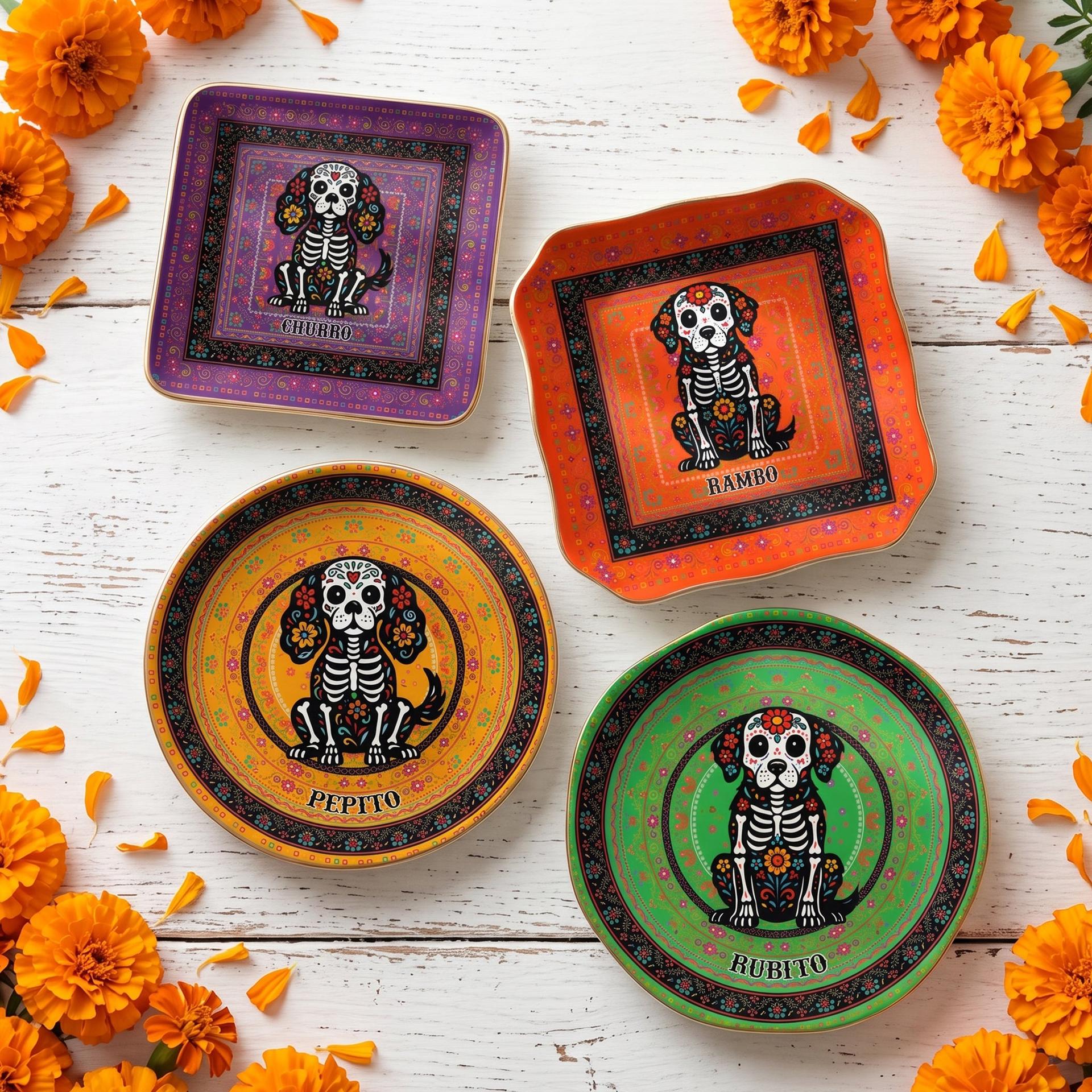
The winners in this niche split into three clear buckets, and each has a different buyer. **Family-name plates** ("The [Surname] Family Cookie Plate") are the volume play. They convert on Etsy because the personalization is visible in the thumbnail and the gifting intent is obvious. Price them at $32–$38. **Recipe keepsakes** — grandma's handwritten cookie recipe sublimated onto a plate — are the premium play. They photograph beautifully and justify $40–$48 because the buyer is preserving something. If you want a deeper read on premium-priced holiday keepsakes, the same psychology drives personalized Santa letters and keepsakes, another category where emotional value outruns material cost. **Serving boards** with engraved-style holiday typography round out the trio. They photograph well in flat lays, ship flat, and appeal to the hostess-gift buyer who isn't personalizing. One pattern worth noting: sellers who bundle a plate with a small cookie cutter or recipe card report meaningfully higher average order value without adding shipping weight.What Does the Real Margin Look Like?
Run the numbers before you design anything. A factory-direct blank 10-inch ceramic plate typically lands between $4.50 and $7.00 depending on supplier and volume. Sublimation print cost adds $1–$2. Packaging runs about $0.90. Shipping a 1.5-lb flat parcel domestically is roughly $6–$8. At a $34 retail price, that leaves $16–$20 gross profit per unit — a 47–58% margin band. Compare that to a $19 mug with $1.40 packaging and a 4% damage rate, and the plate wins on both absolute profit and predictability. MCDFL, for example, runs MOQ 1 with 3–7 day fulfillment and ships to 50+ countries, which matters if you're testing designs without committing to inventory. That flexibility is the difference between a test batch and a gamble.
How Should You Plan the Q4 Calendar?
Timing is where most beginners lose the season. Etsy and Shopify holiday search traffic starts climbing in mid-October and peaks the first two weeks of December. If your listings aren't live and indexed by October 1, you're donating the best window to competitors. A workable 2026 schedule looks like this: - **August:** finalize 6–8 designs, order samples, shoot mockups - **September:** build listings, write SEO titles, set up personalization fields - **October 1:** go live with holiday-specific tags - **November 1:** launch gift-guide ads and bundle promos - **December 10:** switch messaging to "order by" cutoffs Sellers who treat Q4 as a 90-day campaign rather than a December sprint consistently rank higher by Black Friday. The same early-launch logic applies to Christmas door hangers and porch signs, where listing age feeds search placement.What Are the Most Common Beginner Mistakes?
Three mistakes sink most first-season attempts. **Skipping personalization fields.** A generic "Merry Christmas" plate competes on price. A "The [Name] Family" plate competes on nothing — it's the only one. Personalization is your moat. **Underestimating mockup quality.** Buyers can't touch the product, so the mockup *is* the product. Flat, well-lit photos with the design clearly legible beat styled lifestyle shots every time in this category. **Ignoring shipping cutoffs.** A plate ordered December 18 that arrives December 27 becomes a return and a one-star review. Publish your cutoff date prominently from November 1. Fix those three and the category largely runs itself.Frequently Asked Questions
Q: Do sublimation-printed plates survive the dishwasher?
A: Quality sublimation on properly coated ceramic holds up to normal dishwasher cycles, but always state care instructions in your listing. Buyers who hand-wash report longer print life, and setting that expectation upfront reduces complaints.
Q: What's the best price point for a personalized cookie plate?
A: Most successful listings sit between $28 and $45. Family-name plates cluster around $32–$38, while recipe keepsakes and larger serving boards justify $40+. Price below $25 and you signal "cheap gift," which hurts conversion in this emotional category.
Q: Can I offer these on Shopify as well as Etsy?
A: Yes, and you should. Etsy brings discovery traffic; Shopify captures repeat buyers and higher-margin bundles. Use the same mockups but write longer, story-driven product pages for Shopify where buyers aren't comparison-shopping in a grid.
Q: How many designs should I launch with?
A: Six to eight is the sweet spot for a first Q4. Fewer than five and you can't test which style converts; more than ten and you spread your mockup budget and ad spend too thin to learn anything useful before December.
Ready to Explore MCDFL's Product Catalog?
Browse 500+ factory-direct POD products and contact us to set up your B2B partner account.
Explore Products